
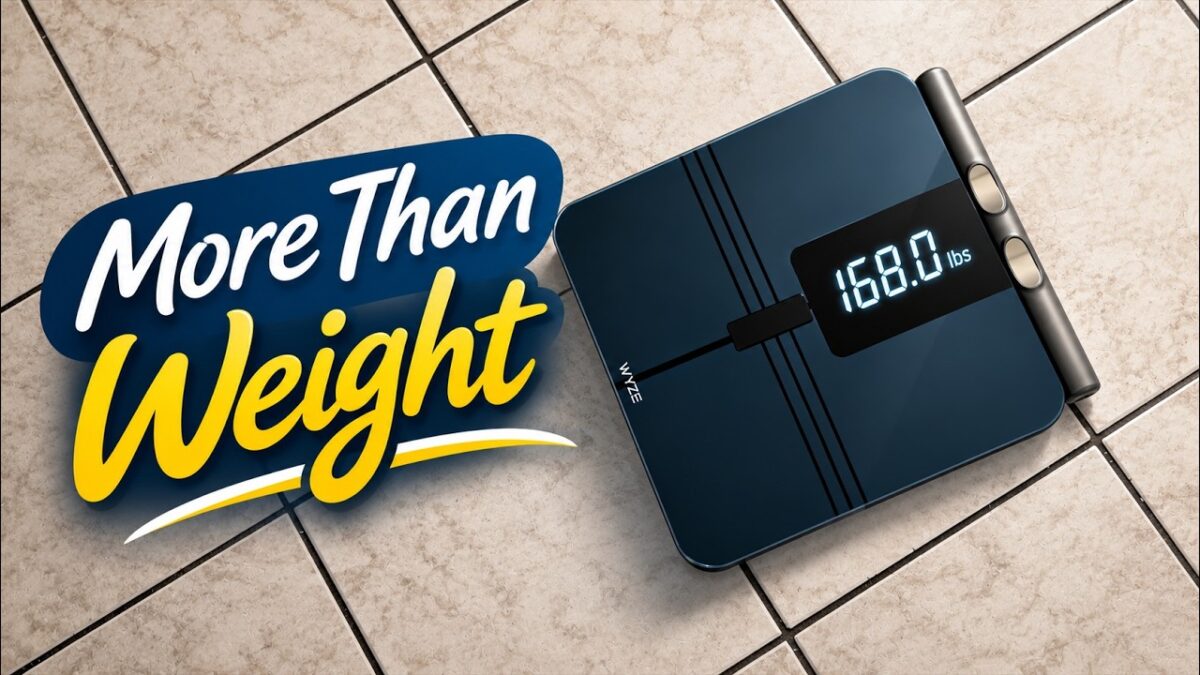
The body composition scale in my latest video puts two features front and center: a large display that is easy to read without reaching for a phone, and a built-in handle for upper- and lower-body estimates. The Wyze Scale BodyScan on Amazon is the 4.7-inch LED model, not the similarly named Ultra BodyScan. My video follows a weigh-in and explains how the handle, extra measurements, and Wyze app fit together.
The main takeaway from the video is convenience rather than a laboratory accuracy claim. I liked seeing the weight directly on the scale, while the additional body composition estimates offer more information to follow over time. Here is what the video actually covers, with manufacturer specifications kept separate from the on-camera demonstration.
Wyze sent me this smart scale to review. As an Amazon Associate, I earn from qualifying purchases. If you buy through links in this post, I may receive a commission at no additional cost to you.
Screenshots in this post are from my YouTube video.
Body composition scale at a glance
Wyze sent me this smart scale to review. As an Amazon Associate, I earn from qualifying purchases. If you buy through links in this post, I may receive a commission at no additional cost to you.
| Feature | What the sources say |
|---|---|
| Model | Wyze Scale BodyScan; black model WL_SCLBNB |
| Display | 4.7-inch LED; seven key metrics on the scale, according to Wyze |
| Measurement system | Dual-frequency, eight-electrode BIA with a handle, according to Wyze |
| Detailed reports | Amazon describes 50+ app-report metrics; Wyze lists 17 essential metrics |
| Connection | Bluetooth 5.0; this model does not add the Ultra BodyScan’s Wi-Fi |
| Household sharing | Automatic recognition for up to eight users; guest measurements |
| Weight range and power | 11–400 pounds; four included AAA batteries, per Wyze |
| Price reference | About $80 on Amazon; prices and available offers can change |
The specifications above come from Wyze’s BodyScan product page and the Amazon listing linked here. The video supplies the hands-on footage and my impressions of the display. The black Amazon listing identifies the model as WL_SCLBNB; checking the display type and model name helps avoid mixing it up with other Wyze scales.
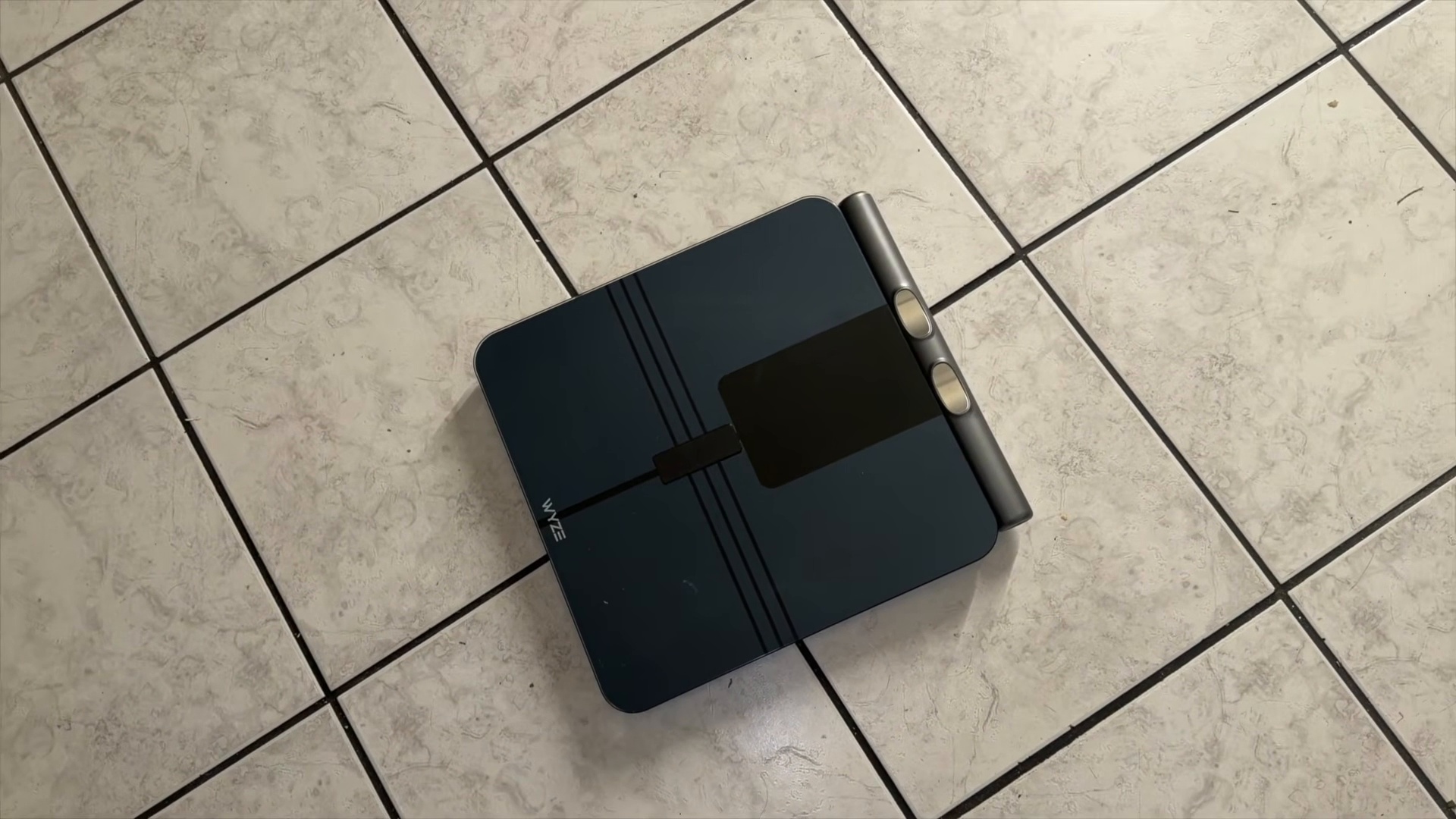
What my video shows first: a straightforward weigh-in
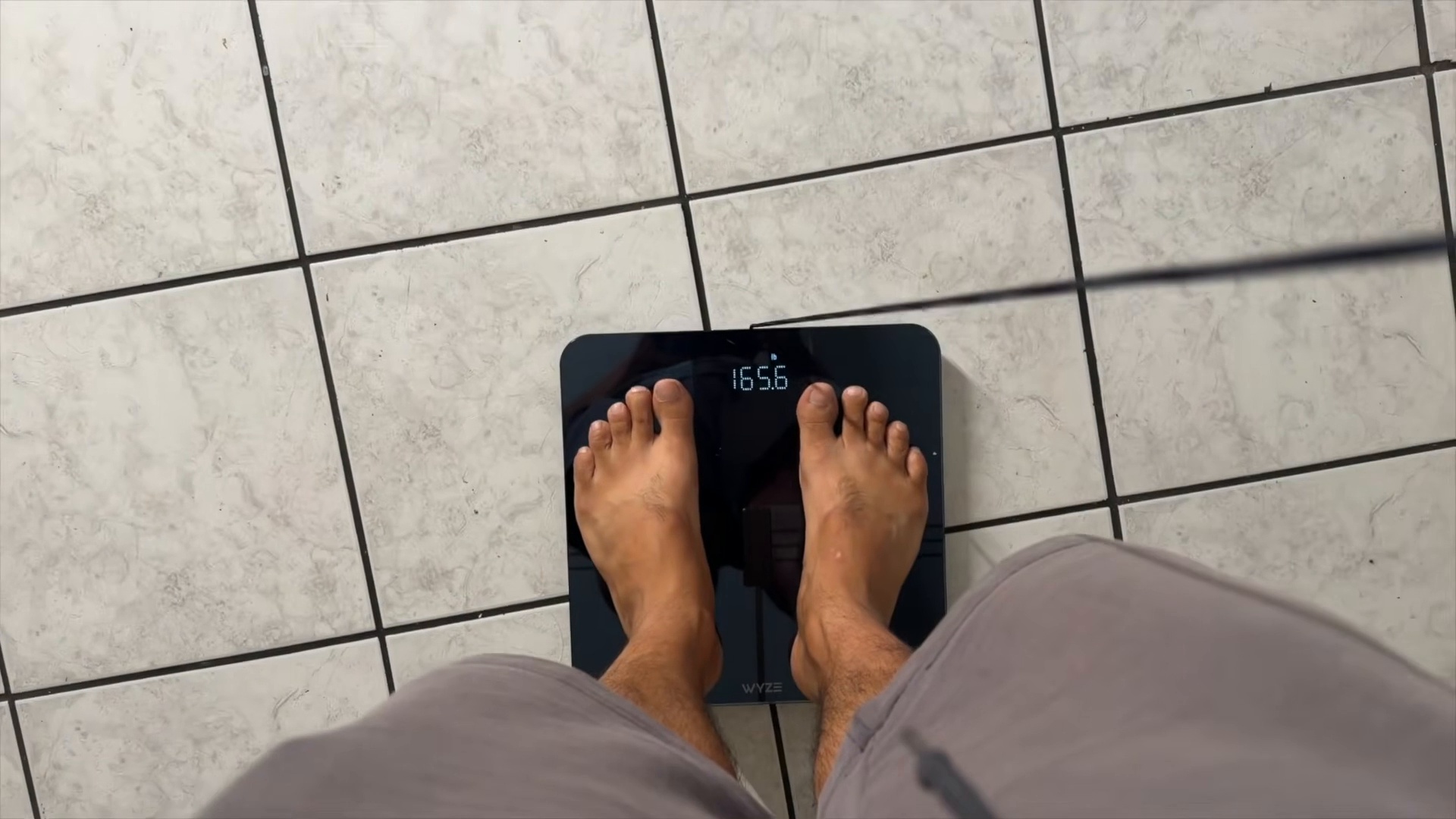
The demonstration begins with a familiar task: stepping onto the scale to check weight. In the video, the number appears on the digital display, and I specifically point out that it is easy to read without picking up my phone. That is the clearest everyday benefit shown on camera, especially for someone who wants a quick bathroom check rather than an app session every time.
The footage also shows me standing barefoot on the platform and using the handle. It is a short product demonstration, not a record of months of measurements or a comparison against a clinical instrument. Nothing in the video establishes long-term repeatability, and the weight shown in one frame should not be treated as an accuracy benchmark. The review is strongest as a look at the hardware and the basic measurement routine.
The handle is the difference from a basic bathroom scale
Around the handle demonstration, my narration explains that the eight-electrode system estimates body composition across the arms, legs, and torso. Wyze describes that system more specifically as dual-frequency bioelectrical impedance analysis, or BIA. Its product page says the handle adds hand contact to the foot contact on the platform, enabling segmental estimates rather than relying on a foot-only layout.
Wyze’s instructions say full body composition measurements require bare feet and holding the handle. Its troubleshooting guidance also calls for keeping the knees apart, placing thumbs on the sensor areas, and holding the arms at an angle while remaining on the scale until measurement finishes. Those requirements make the handle part of the measurement process, not simply a grip for balance or a carrying accessory.
The important word in my narration is “estimate.” More contact points and more reported numbers are product features; they are not proof that every displayed result matches a medical assessment. Wyze’s own FAQ says home-use smart scales are designed for reference and that BIA results may differ from professional instruments or other methods.
What the 4.7-inch display does—and what stays in the app
In the video, I call attention to the large display and mention body fat percentage, muscle mass, and body water among the additional information the scale can show. Wyze says the LED screen presents seven key metrics. Its published list includes weight, body fat percentage, BMI, muscle-related data, bone mass, protein, and body water, although the wording for units differs between parts of its product page.
That distinction matters when reading the “50+ metrics” language. My video and Amazon’s listing use that figure for the detailed app reports. Wyze’s own page instead describes 17 essential body composition metrics and separately advertises segmental reports. Those are different ways of counting the information presented, not a reason to assume the LED screen displays more than 50 separate readings or that the scale has 50 independent sensors.
For the buying decision, the practical split is simpler: the scale provides a quick on-device view, while the Wyze app supplies the deeper report and measurement history. In the video, I describe the app as a way to follow changes over time. I do not walk through every report screen, so the full app feature set should be understood as a listed capability rather than an exhaustive on-camera demonstration.
Sharing the scale and connecting fitness apps
My narration highlights recognition for up to eight connected users as a household feature. Wyze’s documentation adds that the scale supports one-off guest measurements as well. Eight recognized profiles and unlimited guest readings are not the same thing, so households should distinguish between people whose data is regularly synced and someone taking an occasional measurement.
The video also mentions syncing information with Apple Health alongside other fitness activities. Wyze lists Bluetooth 5.0 for this BodyScan model and names Apple Health, Health Connect, and Google Health as supported platforms. The manufacturer lists Android 10 or later and iOS 16 or later for phone compatibility. Anyone relying on a particular app should confirm the current integration and permissions before buying.
Wyze says its detailed reports do not require a subscription. Its setup instructions still involve the Wyze app, a user profile, and Bluetooth pairing. That makes “no subscription” a statement about the report fee, not a promise that all history and detailed analysis are available without an account or phone.
Setup limits worth knowing before stepping on
Wyze specifies a hard, flat surface rather than carpet or a rug, and says to wipe wet glass and feet before use. Its published weight range is 11–400 pounds, and it lists four AAA batteries in the box. The company also advertises up to nine months of battery life; that is a manufacturer estimate, not something demonstrated by this short video.
For health-related use, the manufacturer’s cautions matter more than a feature count. Wyze says pregnancy can affect body composition results and advises consulting a physician and using its weight-only setting. Its BIA and pacemaker guidance warns that the electrical current can affect a pacemaker. Anyone with an implanted medical device should consult their clinician and the device instructions before using BIA. This post is a product overview, not medical advice or a diagnostic recommendation.
Which BodyScan is in this review?
Wyze sells similarly named products, so the screen is a useful identifier. The Scale BodyScan covered here has the 4.7-inch LED display and Bluetooth. According to Wyze’s comparison, the Scale Ultra BodyScan adds a customizable TFT screen and Wi-Fi. Features from that more expensive model should not be silently carried over to this one.
For another handle-equipped scale already covered on this site, see my RunStar Smart Scale review. That is a separate video and product overview, not a controlled head-to-head comparison. My Wyze footage does not establish that either scale produces more accurate body fat or muscle estimates than the other.
Bottom line from my video
My closing impression is that the Wyze BodyScan combines a readable display, detailed body composition estimates, and app connectivity in one device. That makes it worth considering for someone who wants more context than a weight-only bathroom scale, while still being able to read a result without immediately reaching for a phone.
The limitations are equally important: my video does not verify clinical accuracy, demonstrate every app function, or establish long-term reliability. If the display-and-handle routine shown here suits the way you want to track measurements, check the current Wyze Scale BodyScan on Amazon listing and compare its specifications with the exact model you intend to order.
Notes and disclosure
Wyze sent me this smart scale to review. As an Amazon Associate, I earn from qualifying purchases. If you buy through links in this post, I may receive a commission at no additional cost to you.
Primary sources: my Wyze BodyScan video and description; Wyze’s specifications, comparison, and FAQ; Wyze’s BodyScan introduction; and the Amazon product listing linked above. Product capabilities and prices are attributed to those sources; no independent laboratory validation is claimed.