
A 3D printed car key holder made from $3.11 of filament can sell for about $40, leaving roughly $37 in gross profit, according to Layered Kingdom. The YouTube channel printed popular models and compared material cost, print time and going prices for similar listings.
In its numbers, small, useful prints did better per hour of printing than big showpieces. A slim wallet that uses under a dollar of filament sells for $20 to $25, while a 15-hour large figure earned only about $2.54 per print hour. LayerLab, which says it made around $7,000 across Etsy and eBay in 12 months of spare-time selling, recommends designing products that fix everyday annoyances.
Important: Profit figures are the creators’ own estimates (selling price minus filament) and don’t include labor, fees or packaging. Income figures are their own claims.
Best Things to 3D Print and Sell: Layered Kingdom’s Numbers
Prices from Amazon at time of writing. I may earn a commission from links, at no cost to you.
| Print (Layered Kingdom rank) | Filament or cost | Going price for similar items | Estimated gross profit |
|---|---|---|---|
| Airless basketball (#1) | High print time, costly filament | $1,000–$2,500 for originals; he’d sell at about $200 | About $160 |
| Garage car key holder (#2) | 156 g, about $3.11; 6 h 13 min | About $40 | About $37 |
| Slim wallet (#3) | Under $1 of filament | $20–$25 | — |
| Cable winders/organizers (#4) | Under 90 cents; 1 h 20 min–1 h 45 min | $10–$18 | — |
| Chess set (#5) | About $3.39 to make | $35–$50 (he suggests $40) | About $36.61 (our math) |
| Soccer trophy container (#7) | 69 g, about $1.38; about 4 h 15 min | $15–$30 (he suggests $25) | About $23.62, or $5.56 per print hour |
| Fidget toy (#9) | 65 g, about $1.30; just under 4 h | About $12 | About $10.71 |
| Large brick-style figure (#10) | 300 g; 15 h | He suggests $45 | About $38.42, or $2.54 per print hour |
Source: Layered Kingdom, “I Tested the Most Profitable 3D Prints”. He said profitability “is not definitive” and depends on how you market. Several of these are other people’s designs: the wallet is by Maker Verse Design and the cable winders by Squin. Check each model’s license and your marketplace’s rules before selling.
Best-Selling Product Types
| Category | Examples from sellers | Why it sells |
|---|---|---|
| Problem-solvers | LayerLab’s blind stopper, sold as a four-pack for about $20 | A strong, specific need, LayerLab says |
| Replacement parts | Battery covers for scales, remotes and other devices (LayerLab idea) | Buyers search for an exact fit |
| Useful home and garage items | Key holders, cable organizers, wallets (Layered Kingdom) | Low filament cost and practical appeal |
| Market impulse buys | Dice, articulated octopi and bundled “bitty packs” (Basically Benski) | Low price points at in-person events |
| Games and hobby pieces | Chess sets, dice towers | High perceived value |
How to Find a Product to Sell
LayerLab’s process (LayerLab, “How to Find Winning Products to 3D Print and Sell!”):
- Start with annoyances. Walk around your house and note what bugs you. If it annoys you, it probably annoys other people too.
- Check whether a fix already exists. Search Google and Reddit. Someone sharing your problem is a good sign.
- Ask friends and family whether the problem bothers them before you spend days designing.
- Favor fixes over toys. LayerLab says to make things people need rather than decorative pieces.
- Learn 3D modeling. He taught himself on YouTube and says original designs make you stand out. If you find a cool commercially licensed model, many others are likely selling it already.
At markets, Basically Benski warns against putting “all your eggs in one 3D printing basket” unless you’ve found a real niche. His best sellers at one show were low-priced bundles, and he priced deals like a free small with a $3 medium (Basically Benski, “What I Actually Sell at 3D Printing Markets (Real Sales Data)”).
Etsy’s Original-Design Rule
Since a June 10, 2025 update to Etsy’s Creativity Standards, items made with computerized tools like 3D printers must be produced from the seller’s own original design, Value Added Resource reported. Templates designed by others are no longer allowed. That rules out selling most downloaded models on Etsy, even with a commercial license.
Printers for Colorful, Personalized Products
Name tags, keychains and colorful figures sell better in multiple colors. These budget multicolor printers listed on Amazon on Oct 17, 2026:
| Printer | Price | Color system | Buy |
|---|---|---|---|
| Anycubic Kobra X | $299.99 | ACE Gen 2, 4 colors, expandable to 19; Anycubic says 81.25% shorter filament changes | Check price |
| Elegoo Centauri 2 Combo | $328.99 | CANVAS 4-color with RFID and auto-refill; open frame | Check price |
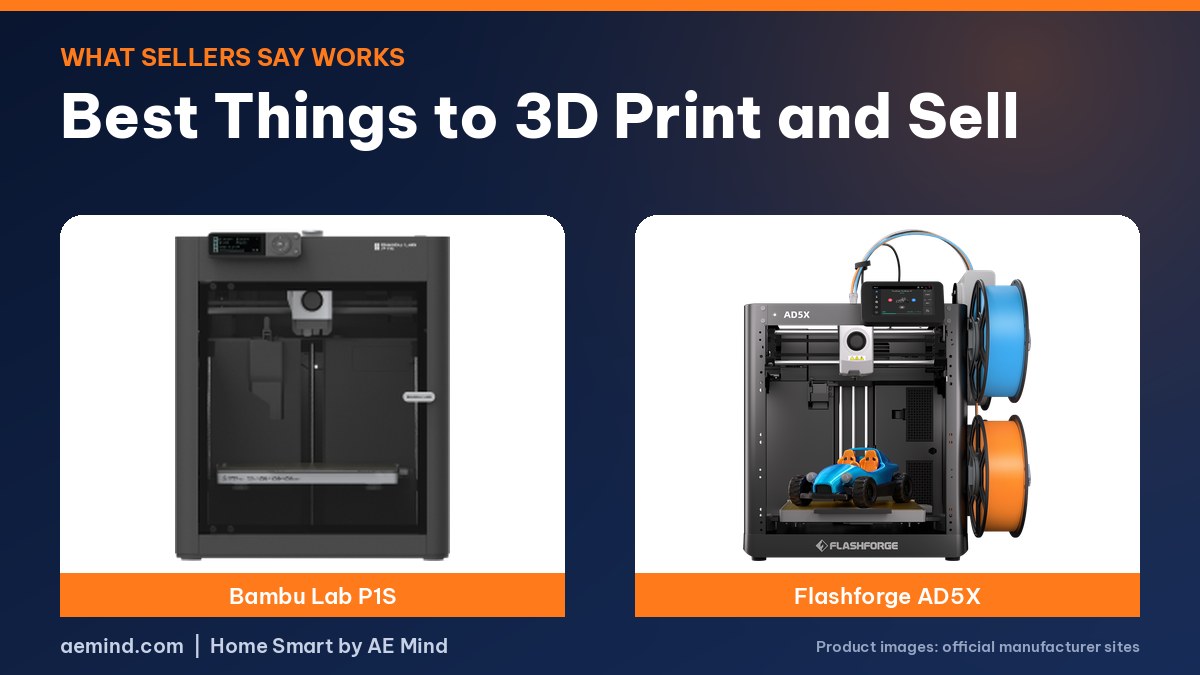
| Flashforge AD5X | $349.00 | IFS 4-color integrated; 220 mm build volume | Check price |
Layered Kingdom said printing a multicolor model on a printer that cut filament waste raised its profit margin (Layered Kingdom, “I Tested the Most Profitable 3D Prints”). Less purge waste means lower material cost per sale.
How This Guide Was Researched
Product ideas and numbers come from the YouTube creators credited above. The Etsy rule comes from Etsy’s Creativity Standards and Value Added Resource’s report. Printer specs come from maker pages and prices from Amazon on Oct 17, 2026.
Video: Layered Kingdom, “I Tested the Most Profitable 3D Prints”
Frequently Asked Questions
What is the most profitable thing to 3D print?
Layered Kingdom ranked an airless basketball first and a garage key holder second. LayerLab recommends original problem-solving products.
Can I sell 3D prints from Thingiverse or MakerWorld?
Check each model’s license. On Etsy, 3D printed items must be your own original design.
What sells at craft fairs?
Basically Benski’s top sellers at one show were low-priced bundles and small items.
Are small or big prints more profitable?
In Layered Kingdom’s estimates, a soccer trophy container earned about $5.56 per print hour, more than double the $2.54 of a 15-hour figure.
Sources
- Layered Kingdom, “I Tested the Most Profitable 3D Prints”
- LayerLab, “How to Find Winning Products to 3D Print and Sell!”
- Basically Benski, “What I Actually Sell at 3D Printing Markets (Real Sales Data)”
- Etsy Creativity Standards
- Value Added Resource: Etsy Creativity Standards Update, June 10, 2025
- Amazon listings: Anycubic Kobra X, Elegoo Centauri 2 Combo, Flashforge AD5X (from Amazon at time of writing)
Related: How to Price 3D Prints | Is a 3D Printing Business Profitable? | Best Budget Multicolor 3D Printer
Notes and disclosure
Note: Printer prices come from Amazon listings at time of writing. Profit estimates are the creators’ own and leave out labor, fees and packaging.