
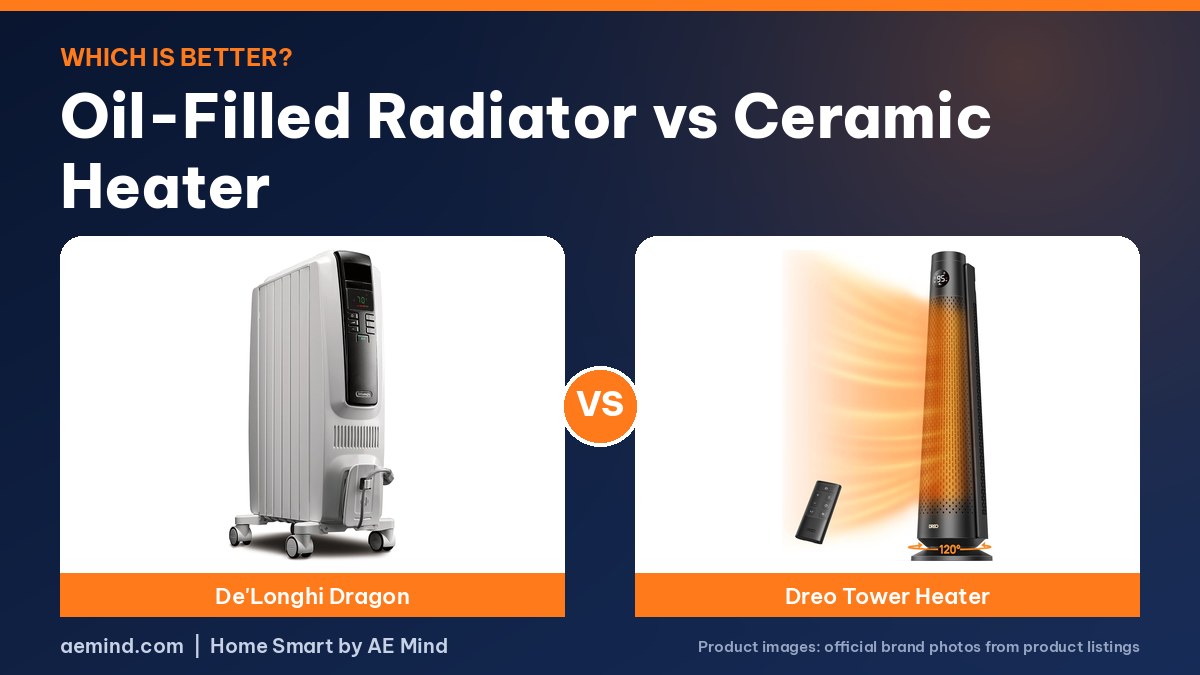
In the oil-filled radiator vs ceramic heater matchup, both turn electricity into heat at the same efficiency, so the choice comes down to speed and noise: ceramic heaters warm a spot in seconds, while oil-filled radiators heat slowly but silently and keep radiating after they switch off, according to Zach Of All Trades, a South Dakota YouTube DIY channel, and Multnomah County’s weatherization program in Oregon.
Here is how each type works, what they cost to run and the models worth buying from De’Longhi, Dreo, Vornado and Lasko, with Amazon prices checked October 16, 2026.
Oil-filled radiator vs ceramic heater: models compared
Prices checked on Amazon Oct 16, 2026. I may earn a commission from links, at no cost to you.
| De’Longhi Dragon Digital | De’Longhi Oil-Filled Radiator | Dreo 30-inch Space Heater | Dreo Smart Wall Heater (WH719S family) | Lasko 29-inch Ceramic Tower 5586 | |
|---|---|---|---|---|---|
| Type | Oil-filled radiator | Oil-filled radiator | Ceramic (PTC) tower | Ceramic (PTC), wall-mounted | Ceramic tower |
| Power | 1,500 W (listed) | 1,500 W (listed) | 1,500 W class | 1,500 W (listed) | 1,500 W (listed) |
| Notable | No fan; 24-hour timer; 75% more radiant surface than RadiaS (listed) | ComfortTemp mode; no fan (listed) | Oscillates up to 120°; 25 dB claimed; 5 heat levels and ECO (listed) | 120° oscillation; 1°F thermostat; app and voice (listed) | Wide oscillation; remote; 8-hour timer (listed) |
| Buy | Check price | Check price | Check price | Check price | Check price |
Efficiency is a tie
Multnomah County’s weatherization program says all electric resistance heaters produce exactly the same heat per dollar regardless of age or energy claims, because they convert 100% of their electricity to heat. Project Farm measured the same in his testing: ceramic and convection heaters convert very close to all incoming electricity into heat. An oil-filled radiator and a ceramic heater on the same 1,500 W setting therefore make the same amount of heat; they just deliver it differently.
How a ceramic heater works
A ceramic (PTC) heater pushes air across a heated ceramic element with a fan. Zach Of All Trades calls these the sprinters of heating: they warm up quickly, are affordable and portable, and suit smaller spaces that need a quick fix. The French Glow found Dreo’s ceramic heaters produce heat within about two seconds of switching on, and that oscillation and fan design determine how far that heat reaches.
How an oil-filled radiator works
An oil-filled radiator heats a sealed reservoir of oil that radiates and convects heat from its fins. Zach Of All Trades calls them the marathon runners: they take longer to warm up but stay warm for a good while after they are turned off, and they are strong and silent with no fan. He notes the oil is a heat reservoir that circulates inside the sealed unit and never needs refilling. De’Longhi says its radiators deliver gentle heat with no fan to stir up dust, pollen and dander.
Oil-filled radiator vs ceramic heater: side by side
| Oil-filled radiator | Ceramic heater | |
|---|---|---|
| Warm-up | Slow | Seconds (The French Glow) |
| Noise | Silent, no fan | Fan noise; towers are quieter (The French Glow) |
| Heat after switching off | Keeps radiating (Zach Of All Trades) | Stops quickly |
| Best for | Steady heat in a room you stay in | Quick heat where you are |
| Efficiency | About 100% | About 100% |
| Weight and size | Heavier | Lighter and compact |
Best oil-filled radiators
The De’Longhi Dragon Digital adds a digital panel, a 24-hour timer and what De’Longhi says is 75% more radiant surface area than its RadiaS model, with a design that boosts convection for faster warm-up. The De’Longhi Oil-Filled Radiator keeps controls simple and adds ComfortTemp, which De’Longhi says automatically manages temperature and power and is up to 20% more efficient than running the same unit’s thermostat at maximum. Both are 1,500 W and have integrated handles for moving them around.
Best ceramic heaters
The Dreo 30-inch Space Heater uses a large PTC element with up to 120° oscillation and five heat levels plus ECO, Dreo says. The Dreo Smart Wall Heater (WH719S family) is the wall-mounted model The French Glow favored for large rooms, and the Lasko 29-inch Ceramic Tower 5586 is a 1,500 W tower with a remote and 8-hour timer. For a room-circulating alternative, Vornado says its Vornado VMHi600 heats all of the air in a room the way a small furnace does.
Running cost
Because both types are equally efficient, running cost depends on wattage and hours. At 1,500 W for eight hours either uses 12.0 kWh, about $2.20 a night at the U.S. Energy Information Administration’s average residential price of 18.31 cents per kWh, or $65.92 a month. Radiators can feel cheaper in practice if their stored heat lets the thermostat cycle off longer, but the energy per hour at a given setting is the same.
Dry air and comfort
Zach Of All Trades says oil-filled heaters generally dry the air less than other types because they radiate heat without blowing air across a hot element, and De’Longhi’s listings likewise advertise gentle heat that minimizes dry air. If winter dryness is the issue, pairing either heater with a humidifier helps; see our guide to the best humidifier for a large room.
Safety features to look for
- Tip-over switches and overheating protection, as Zach Of All Trades recommends.
- A cool-touch exterior if you have kids or pets; Dreo, Lasko and Vornado list this.
- A thermostat and timer so the heater is not running at full power all night.
- Plug straight into a wall outlet and keep clear of curtains and bedding, per each maker’s manual.
Which should you buy?
Zach Of All Trades personally leans toward oil-filled heaters for larger living rooms and long winter nights, and electric fan heaters for small spaces needing a quick fix. Pick a radiator for silent, steady heat in a room you stay in; pick ceramic for fast, directed warmth or a room you use briefly. For more picks, see Best Space Heater for a Large Room.
Video: Zach Of All Trades: “Electric Heaters VS Oil Filled Heaters (What’s ACTUALLY Better?)”. Embedded with credit; the findings are the creator’s own.
Video: Multnomah County Department of Human Services: “What’s the most efficient type of electric heater?”. Embedded with credit; the findings are the creator’s own.
Frequently Asked Questions
Is an oil-filled radiator better than a ceramic heater?
Neither is more efficient. Radiators are silent and hold heat; ceramic heaters warm up in seconds.
Do oil-filled heaters use less electricity?
Not at the same wattage. Multnomah County says all resistance heaters produce the same heat per dollar.
Which is quieter, oil or ceramic?
Oil-filled radiators have no fan and are silent, according to Zach Of All Trades.
Do oil-filled heaters need oil refills?
No. Zach Of All Trades says the oil is sealed and never needs refilling.
Which heats a room faster?
A ceramic heater; The French Glow found Dreo ceramic heaters make heat in about two seconds.
Sources
- Amazon product listings for the products linked above, checked October 16, 2026
- U.S. EIA, Electric Power Monthly, Table 5.6.A (average residential price)
- Zach Of All Trades: “Electric Heaters VS Oil Filled Heaters (What’s ACTUALLY Better?)”
- Multnomah County Department of Human Services: “What’s the most efficient type of electric heater?”
- Project Farm: “I’ve Never Seen A Space Heater This Good!”
- The French Glow: “Don’t Buy a SPACE HEATER on Amazon Until You See This (Top 6 Ranked)”
Related: Best Humidifier for a Large Room | Evaporative vs Ultrasonic Humidifier | Best Space Heater for a Large Room | Heated Mattress Pad vs Space Heater
Notes and disclosure
Note: Prices come from Amazon listings checked on October 16, 2026. Prices change often, so check the current listing. Coverage, output, wattage and runtime figures are the manufacturers’ listed numbers unless a reviewer is credited. Running-cost figures are worked examples at the U.S. average residential electricity price; use the rate on your own bill. Follow each maker’s safety instructions for heaters. Test results and tips quoted above come from the YouTube creators credited in each section; they are their findings, not hands-on claims from me.
Affiliate Disclosure: If you purchase an item through the links on this page, I may receive a commission, at no additional cost to you. Thank you for supporting the channel.