
A 3D printed drone frame can survive hard crashes: no arms broke when AeroBatFPV, a YouTube channel that designs printed FPV frames, threw carbon-fiber-filament test frames at concrete, metal and wood.
Printing lets you build shapes you cannot cut from carbon plate, as Michael Rechtin, a YouTube channel about engineering builds, shows in a full printed race quad. Many FPV pilots on Reddit print TPU accessories and keep carbon for hard-hitting freestyle frames.
Here is what creators found in builds and crash tests, plus which parts are easiest to print.
3D Printed Drone Frame vs Carbon Fiber
Prices checked on Amazon Oct 16, 2026. I may earn a commission from links, at no cost to you.
| 3D printed | Carbon plate | |
|---|---|---|
| Shapes | Any shape, ducts, integrated mounts | Flat plates |
| Weight | Usually heavier | Light |
| Crash repair | Reprint a part at home | Buy a new arm or frame |
| Best for | Tiny whoops, cinewhoops, 3 in, experiments | Racing and freestyle |
Easy Drone Parts to Print First
- GoPro and action camera mounts (TPU)
- Antenna mounts and arm guards (TPU)
- Battery pads and strap guides
- Prop guards and ducts
Tips for a Stronger Printed Frame
- Use tough, stiff filament; creators use carbon-fiber nylon, and TPU for mounts
- Keep a top plate: it adds rigidity
- Use metal standoffs where printed pillars snap
- Print arms so layers run along the arm
Best Printers for Drone Frames
| Printer | Price (Amazon, Oct 16, 2026) | Why it fits | Link |
|---|---|---|---|
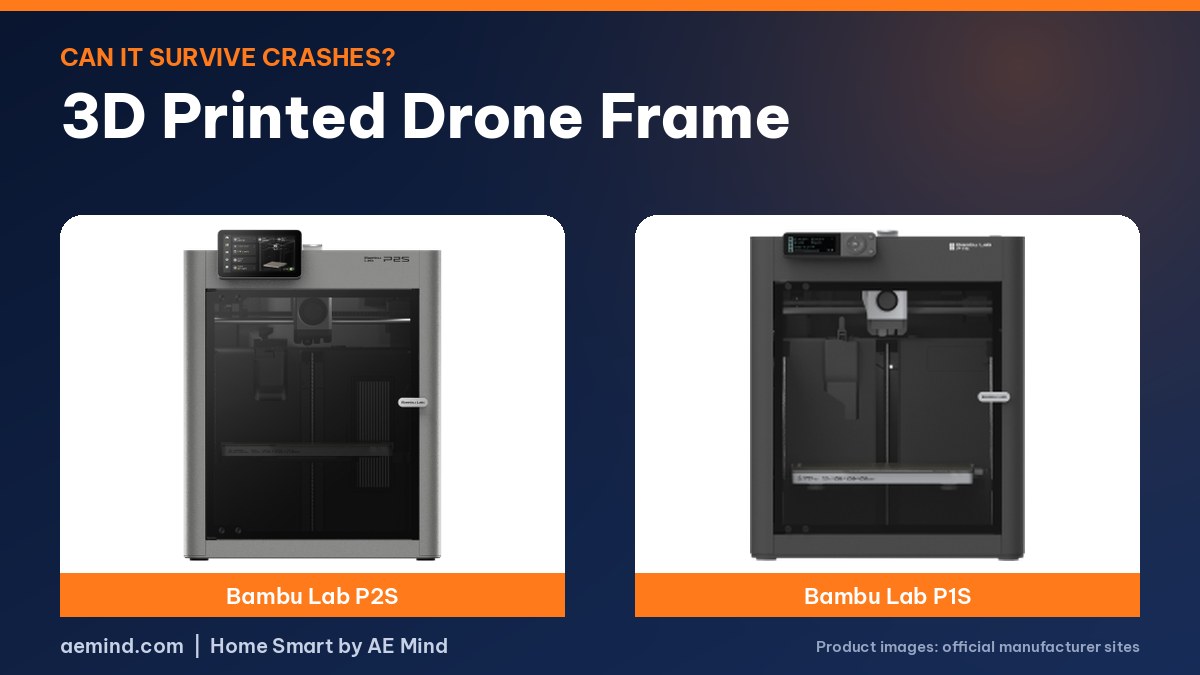
| Bambu Lab P2S Combo | $779.00 | Enclosed with filament drying for nylon-type materials (check the hardened-nozzle requirement) | Check price |
| Bambu Lab P1S Combo | $549.00 | Enclosed for PETG and TPU parts | Check price |
| Bambu Lab A1 | $299.99 | Great for TPU mounts and small parts | Check price |
What YouTube Creators Found About 3D Printed Drone Frame
These are findings from popular YouTube videos, paraphrased from their transcripts and credited. They are the creators’ experiences and claims, not my test results.
- AeroBatFPV (AeroBatFPV: “Carbon Fiber vs 3D Printed FPV Frame DURABILITY Test”) designs 3, 5 and 7 in frames printed in a Bambu Lab carbon-fiber filament, then threw test frames (without top plates) at concrete, metal and wood. No arms broke, though some printed standoffs snapped. He plans to swap to standoffs and noted the top plate would add rigidity. He then crash-tested a carbon frame for comparison.
- Michael Rechtin (Michael Rechtin: “Building a DIY 3D Printed FPV Race Quad”) documents a full printed race quad build (watch for his design choices; captions were not available for our notes).
- On Reddit, FPV pilots often print TPU accessories for every build and keep carbon for hard-hitting freestyle frames.
A DIY Printed Race Quad
Frequently Asked Questions
Is a 3D printed drone frame strong enough?
For small quads and careful flying, yes. Creator crash tests show tough filaments can survive many hits, but carbon is still lighter.
What filament for drone frames?
Carbon-fiber nylon for frames, TPU for mounts and guards, PETG for prototypes.
Are printed frames heavier?
Generally yes, which affects flight time and agility.
What should I print first?
TPU camera mounts and antenna holders.
Sources
- AeroBatFPV: “Carbon Fiber vs 3D Printed FPV Frame DURABILITY Test”
- Michael Rechtin: “Building a DIY 3D Printed FPV Race Quad”
- Mediocre Nerd: “Building a 3D Printable FPV Drone Stronger than Carbon”
- Amazon product listings for the printers linked above, October 16, 2026
Related: Things to 3D Print for Kids | Do You Need a Filament Dryer? | Bambu Lab P1S vs P2S | PLA vs PETG for Beginners
Notes and disclosure
Note: Printer prices come from Amazon listings on October 16, 2026 and change often. The ideas below come from popular YouTube creators and Reddit threads, credited where used. My own hands-on results will be added after my planned test prints.
Affiliate Disclosure: If you purchase an item through the links on this page, I may receive a commission, at no additional cost to you. Thank you for supporting the channel.