
3D printed filament storage only keeps spools dry with a good seal, and one creator’s airtight dry box uses a TPU insert in the lid and a removable desiccant compartment. That design came from KellerLab, a YouTube channel about printing projects.
Lukis3D Studio, a YouTube channel whose storage video has over 130,000 views, printed 80 boxes, about 27 kg of filament. Uncle Jessy, a 3D printing channel, built a wall rack for about $55 in rods and screws plus three rolls of PETG.
Here are the main systems, what creators spent, and tips to keep filament dry.
Types of 3D Printed Filament Storage
Prices checked on Amazon Oct 16, 2026. I may earn a commission from links, at no cost to you.
| System | Best for |
|---|---|
| Airtight printed dry boxes (TPU gasket + desiccant) | Moisture-sensitive filament |
| Wall rod racks | Lots of PLA, visible colors |
| Stackable spool shelves | Small spaces |
| Labels and color tags | Finding spools fast |
Keep Filament Dry
- Use desiccant and change or recharge it
- A hygrometer helps, but every hole is a potential leak
- Dry wet filament first: see our filament dryer guide
Best Printers
| Printer | Price (Amazon, Oct 16, 2026) | Why it fits | Link |
|---|---|---|---|
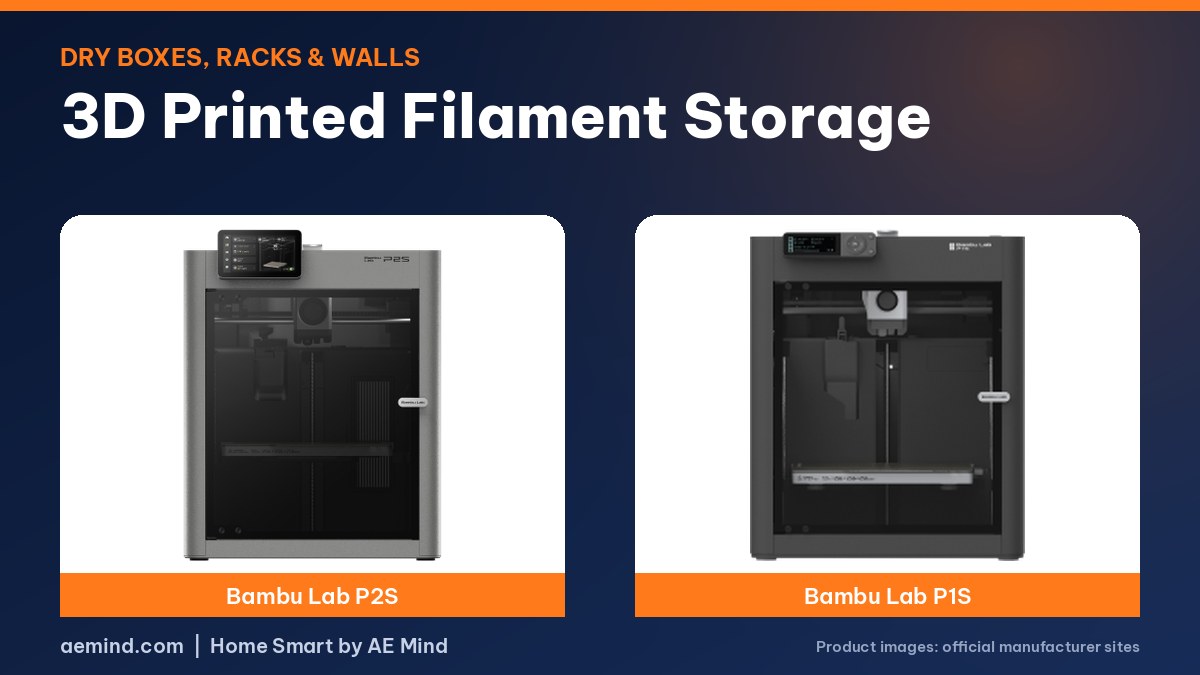
| Bambu Lab P2S Combo | $779.00 | Built-in filament drying | Check price |
| Bambu Lab P1S Combo | $549.00 | Enclosed workhorse for big batches | Check price |
| Bambu Lab A1 | $299.99 | Budget pick for PLA racks | Check price |
What YouTube Creators Found About 3D Printed Filament Storage
These are findings from popular YouTube videos, paraphrased from their transcripts and credited. They are the creators’ experiences and claims, not my test results.
- KellerLab (KellerLab: “Stop Killing Your Filament: My (Almost) Perfect 3D-Printed Dry Rack”) designed a rackable, airtight dry box: a lid with a U-shaped TPU insert that seals the rim, a removable desiccant compartment and label plates you can print from the filament inside. He said the TPU seal is delicate and he has only tested it with Bambu TPU 95A HF.
- Lukis3D Studio (Lukis3D Studio: “The ULTIMATE Filament Storage System”) printed 80 boxes at about 300 g and 6 hours each, which he estimated at about 27 kg and 480 hours, plus TPU gaskets at about 8 g each. He skipped the hygrometer version because it adds more chances for moisture to get in.
- Uncle Jessy (Uncle Jessy: “Easily the best 3D Printing Filament Storage Solutions”) built a wall rack and said he spent about $55 at Lowe’s on rods and screws, plus about three rolls of PETG.
- On Reddit, users say printed boxes need good seals to work, and many prefer cheap cereal boxes for dry storage.
The Ultimate Filament Storage System
Frequently Asked Questions
Do 3D printed dry boxes stay airtight?
With TPU gaskets and good lids, but they must be printed well.
What filament for storage boxes?
PLA or PETG for boxes; TPU for gaskets.
Is printed storage cheaper than buying?
It can be for racks, but large dry-box systems use a lot of filament and time.
Do I still need a dryer?
Storage keeps dry filament dry; wet filament needs drying first.
Sources
- KellerLab: “Stop Killing Your Filament”
- Lukis3D Studio: “The ULTIMATE Filament Storage System”
- Uncle Jessy: “Easily the best 3D Printing Filament Storage Solutions”
- Amazon product listings for the printers linked above, October 16, 2026
Related: Do You Need a Filament Dryer? | Gridfinity for Beginners | 3D Printed Pegboard Accessories | Bambu Lab A1 Maintenance Guide
Notes and disclosure
Note: Printer prices come from Amazon listings on October 16, 2026 and change often. The ideas below come from popular YouTube creators and Reddit threads, credited where used. My own hands-on results will be added after my planned test prints.
Affiliate Disclosure: If you purchase an item through the links on this page, I may receive a commission, at no additional cost to you. Thank you for supporting the channel.